A/B Testing AI Copy vs Human Copy
If you want to know which copy wins, test the same offer, same audience, same placement, and measure downstream conversion, not just clicks. A/B testing…
AB Testing AI Copy vs Human Copy
Last updated: October 12, 2026
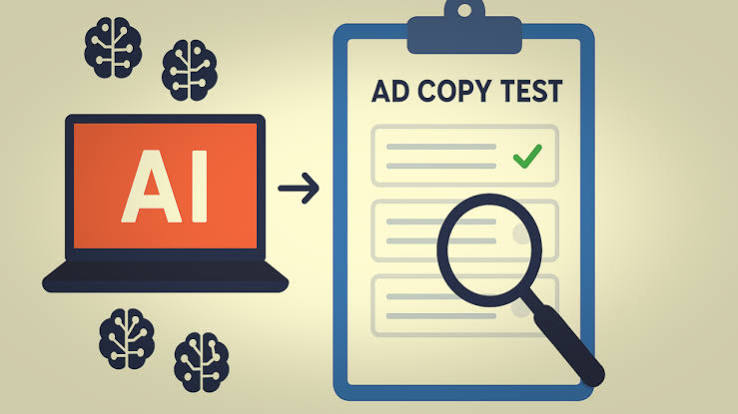
If you want to know which copy wins, test the same offer, same audience, same placement, and measure downstream conversion, not just clicks. A/B testing AI-generated vs human-written copy is useful when the real question is speed versus judgment: AI usually gives you more variants faster, while human writing usually gives you sharper positioning and fewer off-brand mistakes. For A/B testing AI-generated vs human-written copy: setup and metrics, the point is to isolate the copy and measure what changes.
I write about conversion, email, and landing-page copy, so I care less about who wrote the line and more about whether it changes behavior. If you are using AI copy in a regulated category, a premium brand, or a message with real legal risk, consult a professional and review relevant guidance before shipping; treat the test as a quality-control exercise as much as a performance test. The FTC’s guidance on deceptive claims and endorsements is a useful starting point, and rules vary by category and jurisdiction.
Key takeaways
- Test one meaningful change at a time: headline, primary CTA, or opening paragraph, not the whole page at once.
- Judge the copy on conversion quality, not just CTR; a headline that pulls unqualified clicks can still lose.
- Use AI-generated copy to explore more angles, then compare the strongest candidates against human-written control copy.
- Keep traffic split, audience mix, device mix, and runtime stable enough that the result is about the words, not the setup.
- Use a winner only if it also passes brand, legal, and factual review.
What are you actually trying to learn from the test?
You are trying to learn whether AI copy can outperform human copy on a defined job, not whether AI is “better” in the abstract. The useful question is narrower: for this offer, in this channel, with this audience, does AI produce a better response rate than the human baseline?
That means the test should compare copy against a control with the same page, same design, same traffic source, and the same measurement window. If you change the offer, the price, the audience, or the layout, you are no longer testing copy. You are testing a bundle of changes, and the result becomes hard to trust.
A generic article would say “use AI for speed.” That misses the real benefit: AI can generate more variants, which matters when the first draft from a human is decent but not yet tight. It also misses the real risk: AI can flatten tone, introduce vague claims, and produce copy that sounds plausible but does not match the promise your sales team can keep.
I would frame the test as a decision about three things:
- Performance — Does one version convert better?
- Efficiency — How fast can you produce enough valid variants to test?
- Control — Can the copy stay accurate, compliant, and on-brand?
If the answer to any of those is weak, the winner may not be worth shipping.
How do you set up an A/B test for AI-generated vs human-written copy?
You set it up by changing only the copy variable and protecting everything else. Start with one page or one email segment, one primary conversion goal, and two versions: human control and AI variant.
A clean setup usually looks like this:
- One hypothesis. Example: “A more benefit-led headline will increase demo requests.”
- One primary metric. Pick the action that matters most, such as completed form submissions or purchases.
- One audience slice. New visitors, paid search traffic, or newsletter subscribers — not all three at once.
- One copy element. Headline, hero paragraph, subject line, or CTA.
- One runtime rule. Keep the test open long enough to avoid weekday/weekend noise and small-sample luck.
Use random allocation if your platform supports it. If it does not, fix the split as closely as possible and avoid routing different traffic sources into each version. A 50/50 split is common because it keeps interpretation simple, but the exact ratio matters less than consistent assignment.
A common mistake is to let the AI version include more than copy. For example, one team uses AI to rewrite the headline and also shortens the form. That can create a pretty graph and a misleading conclusion. If the form changed, the result is not a copy test.
I would also set a quality gate before launch: brand review, factual review, and legal review if the claims touch money, health, or regulated language. A copy test is not the place to discover that an AI line implies a guarantee the company cannot support.
The honest side-by-side
Human-written copy wins when nuance, trust, or category knowledge matters most. AI-generated copy wins when you need volume, fast iteration, or many first-pass angles. The choice is not moral; it is operational.
| Criteria | AI-generated copy | Human-written copy | Winner for [condition] |
|---|---|---|---|
| Variant volume | Can produce many headlines, CTAs, and bodies in minutes | Slower to draft and revise | AI, when you need 20+ angles fast |
| Brand nuance | Often generic unless heavily guided | Usually better at voice, rhythm, and restraint | Human, for premium or distinctive brands |
| Factual safety | Can invent or overstate if prompts are weak | Less likely to fabricate, but still needs review | Human, for regulated or high-stakes claims |
| Speed to first draft | Fast, often within one workflow session | Slower, especially with specialist writers | AI, when turnaround matters |
| Original positioning | Good at remixing known patterns | Better at sharper category insight | Human, when the message needs a real point of view |
| Testing breadth | Makes multivariate exploration easier | Useful, but fewer versions usually emerge | AI, for early-stage exploration |
| Consistency across channels | Can keep structure consistent if prompted well | Better at adapting tone per channel | Human, for cross-channel messaging systems |
| Interpretation quality | Wins can be noisy if variants are too similar | Often easier to judge why a line worked | Human, when you need strategic learning |
| Best use case | Rapid ideation and controlled scaling | High-stakes persuasion and careful tone control | Depends on the risk level of the page |
The table hides one subtle point: AI can outperform human writing on mediocre copy tasks because the human control is not actually strong. That does not mean AI is “better.” It means the baseline was weak. The right comparison is not “AI vs any human draft.” It is “AI-assisted or AI-generated copy vs the best human version you can reasonably ship.”
I would not use AI as the final author on a legal landing page, a health claim, or a financial offer where a vague verb can become a serious problem. I also would not use a human-only workflow when a team needs 15 headline variants before lunch. Each method breaks in a different place.
Which metrics should decide the winner?
Conversion rate should usually decide the winner, but only if the conversion is worth something and the sample is large enough to trust. Click-through rate is a tempting vanity metric, yet it can reward curiosity over intent. A line that gets more clicks may still bring the wrong people.
The cleanest hierarchy is:
- Primary conversion metric — purchase, lead form completion, demo request, signup, or qualified reply.
- Secondary efficiency metric — click-through rate, scroll depth, or email open rate.
- Quality metric — downstream sales qualification, refund rate, booked-call rate, or time-to-close.
- Guardrail metric — unsubscribe rate, bounce rate, spam complaints, or complaint tickets.
If you are testing ad copy, CTR may be an early signal, but it should not be the final judge. If you are testing landing-page copy, conversion rate matters more than clicks. If you are testing email subject lines, open rate matters only when delivery is stable and the audience size is large enough to reduce random swings.
A simple rule helps: if the metric can be gamed by curiosity, do not let it win by itself. AI copy often writes flashier lines that raise click rates without improving lead quality. Human copy can be more restrained and still drive better revenue. That is why I prefer a downstream metric whenever possible. A 3% lift in signups is less impressive if the sales team later rejects those leads.
For evidence on testing discipline and statistical caution, I would point readers to the NIST/SEMATECH e-Handbook of Statistical Methods and to the CXL resources on A/B testing methodology. Both are useful reminders that noisy tests can look decisive long before they are. Google Optimize was sunset in 2023, which is another reason to keep your measurement process platform-agnostic and carefully documented.
How long should the test run?
It should run long enough to capture normal traffic variation, and that usually means more than a couple of days. If you stop the test the moment one version pulls ahead, you risk a false winner from weekday behavior, campaign spikes, or plain randomness.
A better rule is to predefine the stop condition before launch. That condition can be a minimum sample size, a minimum runtime, or both. If your traffic is thin, a two-week run is often safer than a quick answer. If your traffic is heavy, you may get usable data faster, but you still need enough conversions to make the signal meaningful.
I would avoid reading the results every hour. Frequent peeking encourages premature decisions. It is better to check on a schedule and keep a written note of the original hypothesis. That protects you from moving the goalposts after the first interesting fluctuation.
One practical point: if the page or campaign is seasonal, do not compare a Monday-heavy window with a weekend-heavy window and call it a copy win. The test window matters as much as the words. A result from Q4 holiday traffic may not hold in March.
The number I trust least is a tiny win from a tiny sample. Even a 10% lift sounds exciting until you realize it came from very few conversions. In that case, the honest answer is not “copy A wins.” It is “the test was underpowered.”
When does AI copy deserve the win?
AI copy deserves the win when the task is exploratory, the brand risk is low, and the winning pattern is clear. It is especially useful for subject lines, ad headlines, and early funnel pages where you need many attempts and the consequences of a weak line are limited.
The strongest AI use case is not full automation. It is assisted ideation with human selection. AI can generate five different angles faster than a copywriter can type two, and that matters when the team needs breadth: benefit-led, pain-led, curiosity-led, proof-led, and objection-led versions. If one of those angles performs better, the model has done its job.
The weakness is that AI often produces “correct” copy instead of compelling copy. It fills the page, but it does not always say anything sharp. That can be fine for a checklist-style landing page. It is a problem for a category that depends on trust, taste, or authority.
I would choose AI copy for:
- low-risk performance tests,
- subject lines and ad variants,
- volume-heavy experimentation,
- teams without a dedicated senior copywriter.
I would skip AI copy as the final version when:
- the offer is regulated,
- the message depends on precise differentiation,
- the brand voice is the product,
- a factual slip would create legal or reputational trouble.
The best AI results usually come from a disciplined prompt and a human editor, not from letting the model speak for itself.
When does human copy deserve the win?
Human copy deserves the win when the message has to carry strategy, not just language. If the page must explain why your offer is different, handle objections, or protect a premium tone, a skilled writer usually has the edge.
Human writers are better at choosing what not to say. That restraint matters more than people admit. Good copy is often about compression: fewer claims, cleaner hierarchy, tighter phrasing, and stronger proof. AI can imitate that shape, but human judgment usually does the sharper cut.
This matters most on high-value pages: pricing pages, enterprise product pages, keynote announcements, apology statements, or any page where one awkward sentence can damage trust. Human writing also tends to be easier to align with sales objections because it can reflect how actual buyers speak. AI can mimic that surface style, but it does not know which objection is real and which one sounds good in a prompt.
The drawback is cost in time and iteration speed. A human writer may produce fewer alternatives, and that slows experimentation. If the team is still searching for the right angle, that can be a problem. Human copy is not automatically better; it is better when the assignment needs judgment.
I would choose human copy for:
- premium positioning,
- regulated claims,
- complex products,
- pages where trust is the main conversion driver.
I would skip human-only drafting when:
- you need rapid variant generation,
- the channel rewards quantity of tests,
- the team is stuck in creative ruts,
- the baseline copy is already good and needs more option breadth.
What are the exception scenarios?
The verdict flips in a few cases, and those cases matter more than the average one. First, if the human baseline is weak, AI may look stronger simply because it gives you more structured options. That is a useful signal about the process, not a proof that AI is inherently superior.
Second, if your team cannot produce enough human variants to get statistical traction, AI can keep experimentation alive. A test that never launches cannot win. In that sense, AI can be the better operational choice even when the final published copy is still human-edited.
Third, if the metric is shallow, the result can be misleading. A curiosity-heavy headline may improve clicks while hurting qualified conversions. That kind of fluctuation can be useful because it encourages a new hypothesis, but it should not be treated as a finished answer.
Finally, if the brand has a very specific voice, the AI version may need so much editing that the speed advantage disappears. At that point, human writing often becomes the simpler workflow.
The practical rule is this: use AI to widen the field, then use humans to narrow it. If the test proves that AI copy improves the right metric by a meaningful margin, ship it. If it does not, keep the human version and document what you learned from the failed variant.
Drafted with AI; not yet reviewed by a person.