How to Create an AI Writing Style Guide That Keeps Brand Voice
1 guide can keep brand voice consistent across 10 drafts, 3 writers, and 1 model. How to create an AI writing style guide that keeps brand voice…
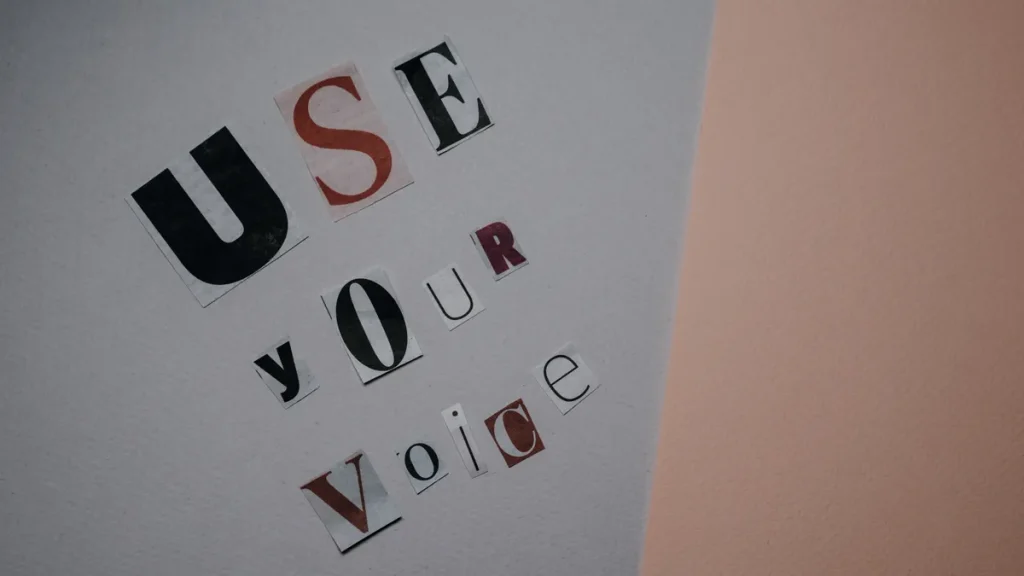
Cutout letters spelling use your voice
Last updated: November 06, 2026
Quick Answer: 1 guide can keep brand voice consistent across 10 drafts, 3 writers, and 1 model. How to create an AI writing style guide that keeps brand voice consistent is to turn fuzzy brand language into rules, examples, and prompt instructions that an AI can follow without guessing.
What an AI writing style guide actually does
How to create an AI writing style guide that keeps brand voice consistent starts with turning brand voice into repeatable instructions, so the same product can sound like the same brand across 10 drafts, 3 writers, and 1 model. It does that by translating taste into constraints: preferred words, banned phrases, sentence rhythm, formatting habits, and examples of what “on brand” looks like.
That sounds simple, but the job is not to write a generic brand book and paste it into a prompt. A useful guide has to survive contact with real prompts. If your team writes social captions, product pages, help articles, and emails, the guide needs enough structure to steer all of them without flattening everything into one voice. A good guide keeps the personality constant while allowing the tone to shift by context.
The common mistake is to make the style guide too abstract. “Friendly but authoritative” and “clear, modern, human” are not instructions. They are labels. An AI needs the operational version: use contractions, prefer active verbs, avoid jargon unless the audience uses it, keep paragraphs to 3 sentences or fewer in customer-facing copy, and choose British or American spelling consistently. Those rules are usable because they are observable.
This is also where the guide saves time. Without it, every prompt becomes a negotiation about tone. With it, the prompt can focus on the message, and the guide handles the voice. That matters most when multiple writers, editors, or subject matter experts feed the same AI tool. A human can infer a brand’s style from context; a model usually cannot.
If the goal is consistent output, the guide has to live where writing decisions happen. It should sit beside the prompt workflow, not in a forgotten folder. That is why it fits naturally inside a human-in-the-loop AI writing workflow: the guide sets the lane, and a person still checks the turn signals.
What should an AI writing style guide include?
How to create an AI writing style guide that keeps brand voice consistent depends on four core parts: voice rules, do-and-don’t examples, a terminology list, and prompt instructions that match your content types. Those four pieces give the model both the boundaries and the pattern to imitate.
Start with voice rules. These are short, testable statements about how the brand sounds. Examples: “Use plain English, not marketing jargon,” “Write in second person for customer-facing copy,” “Prefer short, direct sentences,” and “Use an encouraging tone without sounding promotional.” Each rule should be specific enough that two writers would apply it the same way.
Then add do and don’t examples. This is where abstract rules become visible. If the rule says “be concise,” show one sentence that is too long and one that is better. If the rule says “sound confident, not pushy,” show both versions side by side. AI systems respond better to examples than to philosophy because examples show shape, not just intent.
The terminology list matters more than many teams expect. It should name approved product terms, feature names, department names, capitalization rules, preferred spellings, and words to avoid. If one team says “signup” and another says “sign-up,” or if the product has a trademarked feature name that should never be changed, consult a professional and verify the naming rules with an authoritative source such as the AP Stylebook or your legal team. The glossary prevents drift. This is especially useful when the model tries to “help” by normalizing language.
Prompt instructions should be the final layer. They tell the writer or the model how to use the guide: which sections to reference, how to handle tone changes, and what to do when the prompt conflicts with the brand rules. A prompt instruction might say, “Follow the voice rules and glossary below. Keep the same tone as the example copy. If the brief conflicts with the style guide, flag the conflict instead of guessing.” That kind of instruction makes the guide operational.
A weak guide is a list of adjectives. A strong one is a small system: rules, examples, glossary, and instructions. If a section does not help a writer or a model make a real choice in under 30 seconds, it probably belongs somewhere else.
How do you turn brand voice into prompt rules?
You turn brand voice into prompt rules by converting every vague brand claim into one instruction, one example, and one exception. That is the difference between a mood board and a working style guide.
Use this 5-step process:
- Collect 10 to 20 pieces of on-brand copy from the last 6 to 12 months. Use real assets, not aspirational ones, so the guide reflects the brand people actually read.
- Mark repeated traits. Look for sentence length, level of formality, contractions, technical terms, humor, punctuation, and whether the copy leads with benefits or facts.
- Rewrite each trait as a rule the model can follow. “Sound approachable” becomes “use contractions, avoid passive voice, and keep introductions under 2 sentences.”
- Add a positive and negative example for each rule. If possible, keep examples to 25 to 40 words so the difference is obvious at a glance.
- Turn the strongest rules into prompt language. Put the rules closest to the request, and put the glossary where the model can reference it without hunting.
This process works because AI follows pattern more reliably than intention. A phrase like “write with warmth” is too loose. A phrase like “open with the user’s problem, not a brand slogan” gives the model a decision to make. If the team uses a GPT-style tool, an internal prompt can say, “Write in a calm, helpful voice. Use short paragraphs. Avoid hype words such as ‘revolutionary’ and ‘best-in-class.’ Use the glossary exactly as written.”
The trade-off is that more rules can mean less flexibility. A 5-page guide with 40 rules may sound thorough, but it becomes hard to maintain. Most teams do better with a lean guide of the rules that actually affect consistency. Save edge cases for the examples section or an appendix. A guide nobody remembers is functionally the same as no guide.
The best prompt rules usually also name what not to do. “Do not invent statistics,” “Do not soften a firm answer into a vague one,” and “Do not substitute product names” are all useful because they stop the model from improvising in places where brand trust matters. Negative rules are not glamorous, but they are practical.
How do you keep AI copy on brand?
You keep AI copy on brand by combining a style guide, a fixed prompt template, and a human review pass that checks voice first and grammar second. The guide sets the baseline; the process keeps it alive from draft to draft.
The easiest way to make consistency drift is to let every writer prompt from scratch. A prompt template can prevent that. It should include the same slots every time: audience, goal, channel, key message, must-use terms, banned terms, and style instructions. If the team writes with the same structure, the model gets fewer chances to invent its own structure.
A useful template might look like this:
- Audience: small-business owners
- Goal: explain the new feature
- Voice: clear, practical, confident
- Must-use terms: invoice tracking, due-date reminder
- Avoid: “game-changing,” “open,” “smooth”
- Format: 3 short paragraphs and 1 bullet list
That level of detail gives the AI something concrete to follow. It also makes inconsistencies easier to spot. If one draft sounds casual and another sounds like a press release, the issue is usually in the prompt, not the model.
The human review pass should not try to rewrite everything. It should check for the specific failure modes your guide is meant to catch: off-brand tone, broken terminology, overuse of filler, sentence length that is too stiff or too chatty, and claims that go beyond the brief. A style guide is not a substitute for editorial judgement. It is a way to make judgement repeatable.
This is where many teams make a bad compromise. They either over-edit every line, which wastes time, or they trust the draft too much, which lets drift accumulate. The better approach is to review the few places where voice is most visible: headings, opening paragraphs, calls to action, and any sentence that names the product. Those are the lines readers remember.
One honest limitation: a style guide cannot force originality. If the underlying brief is weak, the output will still feel thin, even if it is perfectly on brand. The guide keeps the voice consistent; it does not rescue a vague message. That is why it works best when paired with a clear brief and a person who can decide what the draft is supposed to say.
What brand examples and glossary entries belong in the guide?
The right brand examples and glossary entries are the ones that remove guesswork from the most common writing decisions. A style guide should not collect every asset the company has ever published; it should include the examples and terms that people reuse every week.
Start with 3 to 5 tone examples for each major content type. For example, if the brand writes landing pages, support articles, and product announcements, show one or two short samples for each. Keep them short enough that the pattern is easy to copy. Long examples can confuse the model because they contain too many competing signals.
The glossary should include approved product names, feature names, abbreviations, capitalization rules, and any terms that have a legal or brand-specific meaning. If “AI-assisted editor” is the preferred term, say so. If the company never uses “AI writer” because it implies something narrower, say that too. A glossary is also the place to note regional spelling, such as colour versus color, if the brand serves more than one market.
Include a “do not translate” or “do not change” list for terms that must stay exact. That matters for proprietary names, subscription tiers, compliance language, and CTA labels. A model can be oddly confident about changing the one word you did not want touched.
The examples section should also show what to do when tone shifts. A help article should not sound like a launch email, even if both are “on brand.” If the guide shows the same brand voice in a calmer and a more promotional register, writers learn the difference between voice and tone. Voice stays stable; tone flexes with context.
One thing to avoid here is overloading the guide with “inspiration” copy that is actually outdated. If the examples no longer match the current product, current audience, or current positioning, they train the wrong habits. A stale example can be worse than none.
Which mistakes make AI style guides fail?
AI style guides fail when they are too vague, too long, or too disconnected from the prompts people actually use. Those failures cost consistency, time, and trust.
The first mistake is writing rules that cannot be checked. “Be engaging” does not help a writer or a model decide whether to use a question, a statistic, or a direct statement. Replace vague traits with observable ones. If the guide does not let two people make the same call, it is not ready.
The second mistake is building a 20-page document that nobody opens. Long guides often collect old debates, edge cases, and competing opinions. They feel complete, but they slow people down. A practical guide can be short if it covers the high-impact choices: tone, structure, vocabulary, and examples.
The third mistake is ignoring channel differences. A single voice guide does not mean every output should sound identical. A product page, help article, and LinkedIn post will not share the same rhythm. If the guide does not say how voice changes by channel, writers will either force one tone everywhere or improvise. Neither outcome is good.
The fourth mistake is treating the guide as a one-time project. AI tools change. Teams change. Product language changes. Consult a professional if your process needs formal review, and review the style guide on a regular schedule, often quarterly or at least after major brand updates. Even a 30-minute review can catch stale terminology before it spreads.
The fifth mistake is leaving the guide outside the workflow. If writers must open a separate document every time they prompt, the guide will be skipped. Put the rules where the work happens: in the prompt template, in the editorial checklist, or in a shared document that is always linked from the writing brief, not just in a standalone file.
The simplest test is blunt: if a new writer can use the guide to produce a decent first draft in 15 minutes, it is doing its job. If they still need a translator for every sentence, the guide is too fuzzy to help.
How do you keep the style guide useful after launch?
You keep the style guide useful by updating it from real drafts, not from opinions. A good guide gets sharper every time it resolves a recurring problem.
Create a small feedback loop. When an editor corrects the same phrase, tone choice, or product term more than once, add that rule or example to the guide. When a prompt consistently produces the wrong voice, adjust the prompt instructions, not just the output. The guide should absorb the fix so the next draft starts closer to the mark.
It also helps to name an owner. That person does not need to rewrite every sentence, but someone should decide when a new rule belongs and when a rule is clutter. Without ownership, style guides drift into contradiction. One section says “be conversational,” another says “use formal language,” and nobody notices until the copy sounds split in half.
Keep version control simple. A dated changelog is enough for most teams. If a rule changes, note what changed and why. That matters when a later draft seems “off” and someone needs to know whether the guide changed or the prompt did. You do not need a complicated system to get the benefit of traceability.
Do not wait for a full rewrite to improve the guide. Small edits are better than periodic overhauls because the team can actually absorb them. A style guide with 12 clean, current rules beats one with 40 rules and 18 exceptions.
The end goal is not a perfect document. It is a reliable one. If the guide helps different people generate copy that sounds like the same brand on the first or second draft, it is doing exactly what an AI writing style guide is supposed to do.
Key takeaways
- Turn brand voice into rules the model can follow, not adjectives it can admire.
- Pair every rule
Drafted with AI; not yet reviewed by a person.